
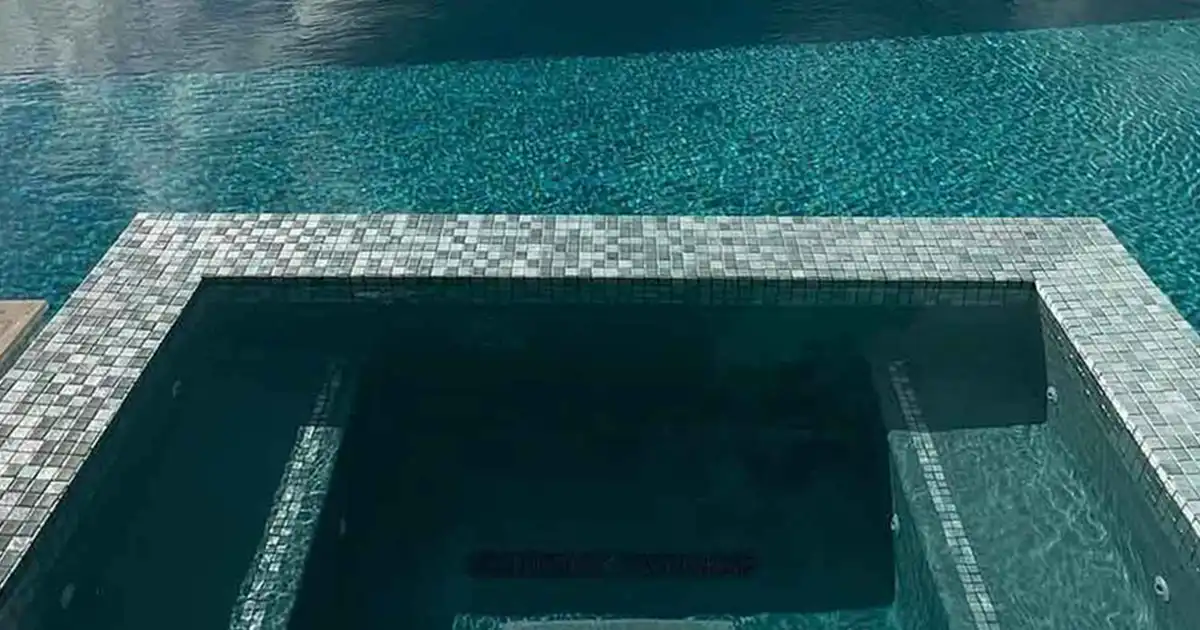
Why refinishing your pool matters
Every pool surface wears out. Sun, heat, rain, swimmers and pool chemicals slowly eat away at the interior finish, and most plaster pools need refinishing every 8 to 10 years. Premium finishes like quartz and pebble can last considerably longer.
Refinishing is not just cosmetic. The interior finish is the waterproof layer that protects your pool’s concrete shell. When it breaks down, you can end up with leaks, algae hiding in rough spots, scraped feet and water chemistry that never seems to stay balanced.
If you are thinking about refinishing your pool, here is what you should know before you call a contractor: the warning signs, your finish options, what the process looks like, what it costs and how to protect your investment once the water is back in.
Signs your pool needs refinishing
One of these on its own may just mean your pool needs a good cleaning or a chemistry adjustment. Several at once usually mean the surface is at the end of its life.
- Rough, scratchy texture. Worn plaster turns sandpaper-like, snagging swimsuits and scraping toes and knees, especially on steps and benches.
- Stains that won’t brush away. Mineral, metal and organic stains that survive brushing and balanced water have soaked into a porous surface.
- Cracks, chips or flaking. Peeling plaster and visible cracks let water reach the shell beneath.
- Hollow spots (delamination). Areas that sound hollow when tapped mean the finish is separating from the shell.
- Blotchy or faded color. Uneven, washed-out patches show where the finish has thinned.
- Exposed aggregate or loose pebbles. On quartz and pebble pools, stones coming loose signal the binding layer is failing.
- Recurring algae. Algae that keeps returning to the same rough patches has found a home in the pores.
- Unexplained water loss or hard-to-balance chemistry. A deteriorating surface can leak and constantly push your pH and alkalinity out of range.
Cracks and hollow spots can point to structural issues, so have a professional inspect the pool before you choose a finish.
Choosing a finish: plaster, quartz, pebble or tile
The finish you choose drives both the look of your pool and most of the cost. Budget, how long you plan to stay in the home and how the pool feels underfoot all matter.
| Finish | Typical lifespan | Look and feel | Best for |
|---|---|---|---|
|
Standard white plaster |
7–10 years |
Smooth, classic bright-blue water |
Lowest upfront cost |
|
Quartz aggregate |
10–15 years |
Smooth with subtle sparkle; many colors |
Balance of cost, durability and stain resistance |
|
Pebble (e.g., Pebble Tec, Pebble Sheen) |
15–25 years |
Textured, natural, lagoon-like |
Longest-lasting cementitious finish; slip resistance |
|
Tile (glass, ceramic, porcelain) |
Longest of any finish |
Luxury, custom designs |
High-end projects; waterline accents |
Plaster is the traditional choice and still the most common. It looks clean and costs the least, but it is more porous, so it stains more easily and wears out sooner.
Quartz blends plaster with crushed quartz. It is harder, more stain-resistant and comes in a wider range of colors than plain plaster.
Pebble finishes embed small polished stones in the surface. They cost more upfront, but because they can last two plaster cycles, they often cost less over 20 years.
Tile is the premium option. Many owners use it at the waterline or for accents rather than the whole pool. Refinishing is also a good time to replace a worn or dated waterline tile border while the pool is empty.
The pool refinishing process, step by step
For the best results, refinishing should be handled by an experienced, licensed pool refinishing company. A typical project follows these steps:
- Free quote and consultation. Your contractor inspects the pool, discusses the look you want and gives you a written estimate. Because finish choices vary so much, budgets vary too.
- Prep the deck area. Patio furniture, electronics and accessories are moved away from the pool so they are not damaged by dust and debris.
- Drain the pool. The water is pumped out safely, following any local discharge rules.
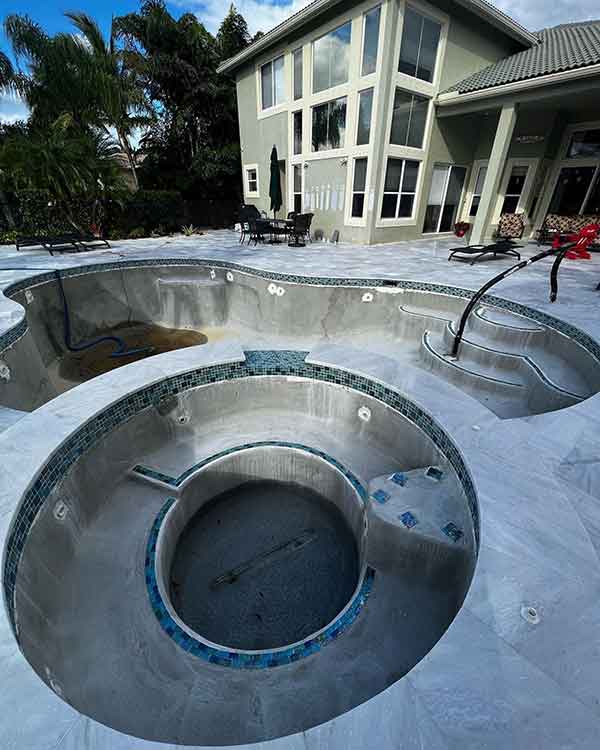
- Strip or prep the old surface. Loose and worn plaster is chipped out or the surface is prepared so the new finish bonds properly.
- Make repairs. Cracks, hollow spots, damaged tile and fittings are repaired before anything new goes on.
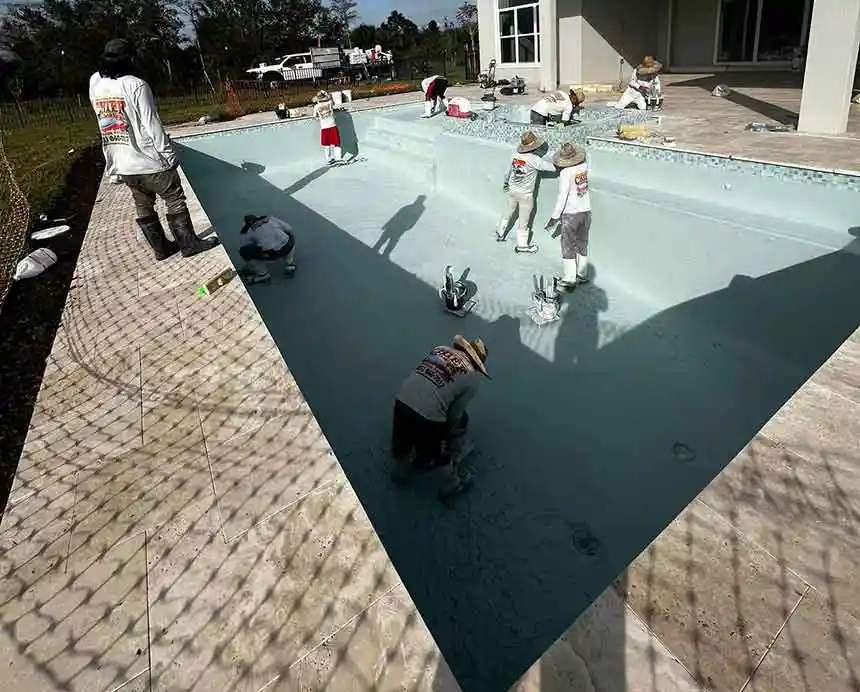
- Apply the new finish. A skilled crew applies plaster, quartz or pebble in one continuous session, then trowels it smooth or exposes the aggregate for a uniform surface.
- Refill right away. The pool is filled without stopping so the finish cures evenly under water.
- Start-up and curing. Water chemistry is balanced and the surface is brushed daily while the finish cures. Cement-based finishes do most of their curing in the first 28 days.
Most projects take about 5 to 14 days from draining to refill, depending on weather, repairs and the finish you choose. Learn more about our pool plastering process.
Cost, timing and Florida considerations
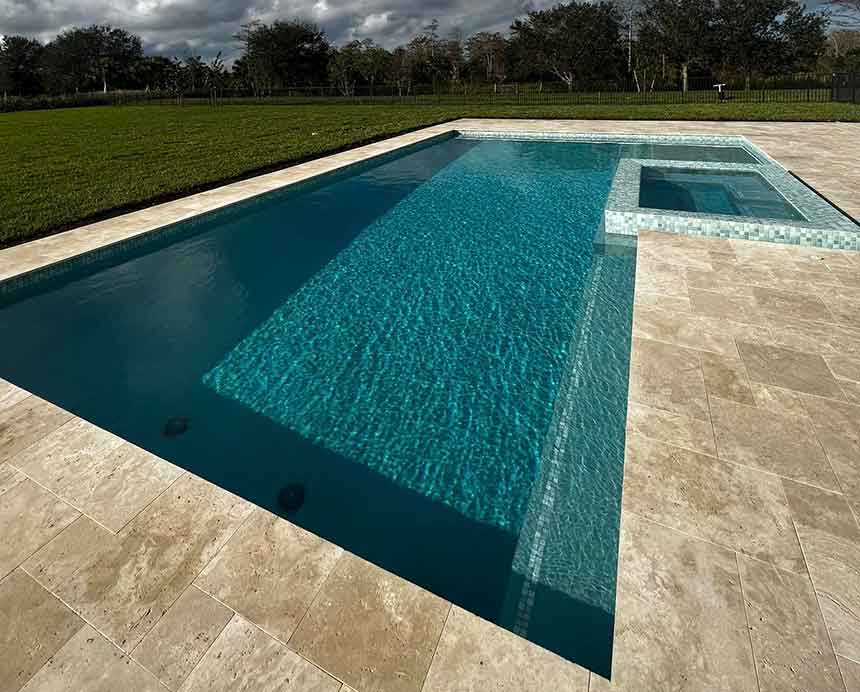
There is no one-size price for refinishing a pool. Size, shape, the finish you choose and the repairs found after draining all affect the final number. National guides put most resurfacing projects at roughly $6,000 to $15,000, with standard plaster at the low end and pebble or full tile at the high end. Steps, benches, spas and tight backyard access add time and cost.
A few things to plan for:
- Hidden repairs. Some problems only show up once the pool is empty. Setting aside an extra 10% to 15% is smart.
- Lifetime value. A finish that lasts 15 to 25 years can cost less over time than replastering twice.
- Bundled upgrades. Waterline tile, coping, lights and steps are cheaper to address while the pool is already drained.
Timing in South Florida. Our year-round swim season means there is no true off-season, but cooler, drier months from late fall through spring are ideal for curing. Intense summer heat and afternoon downpours can complicate application day, so good contractors schedule around the weather.
Florida’s tough conditions. Strong UV, high heat and hard, mineral-rich water speed up wear and staining. Denser finishes like quartz and pebble resist staining better, and consistent water chemistry matters even more here.
Caring for your newly refinished pool
The first month decides how good your new finish looks for the next decade. Follow your contractor’s start-up instructions closely (see Chief Pools’ start-up procedures).
- Brush daily. Brush the entire surface at least twice a day for the first one to two weeks to remove plaster dust before it settles.
- Balance the water carefully. Test and adjust pH, alkalinity and calcium hardness frequently during start-up, then weekly after that.
- Run the filter continuously during start-up and clean it often, since it will catch a lot of dust.
- Hold off on extras. Wait to use automatic cleaners, heaters or salt systems until your contractor says it is safe.
- Keep up the routine. Ongoing brushing and steady chemistry are the best ways to prevent stains and roughness.
How to choose a pool refinishing contractor
- Confirm the company is state licensed and insured. (Chief Pools State License: #CPC1460090)
- Ask to see a portfolio of finished pools and read recent reviews.
- Get a written, itemized quote covering draining, prep, repairs, finish, start-up and cleanup.
- Ask what could add cost once the pool is drained.
- Ask which finish brands they use and what warranty covers the work.
- Make sure they provide start-up instructions and support after the job.
Frequently Asked Questions
How often should I refinish my pool?
Most plaster pools need refinishing every 8 to 10 years. Quartz typically lasts 10 to 15 years and pebble 15 to 25 years with good care.
How long will my pool be out of use?
Plan on about one to two weeks from draining to refilling, depending on weather, repairs and finish type.
Is resurfacing the same as replastering?
The terms are often used interchangeably. Replastering usually means removing the old plaster and applying new plaster, while resurfacing can include upgrading to quartz, pebble or tile.
Can I refinish my pool myself?
Plaster, quartz and pebble finishes require specialized crews, equipment and timing. This is a job for a licensed professional.
Will refinishing fix a leak?
It can seal leaks caused by a cracked or worn surface, but leaks in plumbing or fittings need separate repair. A good contractor will check during prep.
Ready to refinish your pool?
Refinishing your pool restores its look, protects its structure and makes it a pleasure to swim in again. Chief Pools, based in Lake Worth, FL, is a state-licensed pool plastering and tile company that can help you choose the right finish. Contact us or call (561) 640-7217 for a free quote.
